
Iranian Marxist Nida Kaveh: “The Protestors Now Include the Pious Uncles”
 Socialist
Jan 8, 2026 11:32
2652
Socialist
Jan 8, 2026 11:32
2652
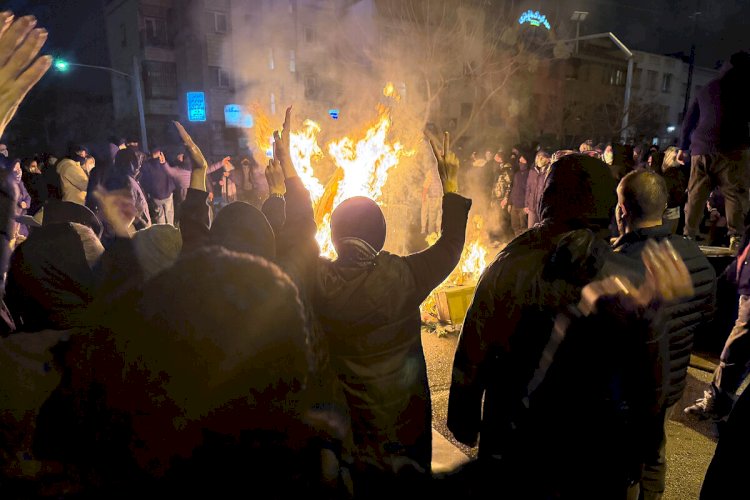
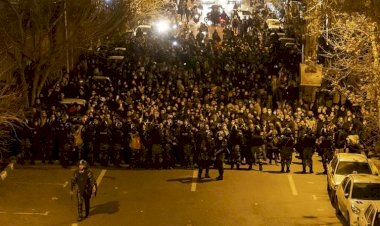
We conducted an interview with Iranian Marxist Nida Kaveh to analyze the class character, the social composition, and the programmatic demands of the uprisings that have gripped Iran for 12 days, resulting in a death toll of at least 35.
What is the current situation in Iran? What triggered the mobilization, and who are the street protesters?
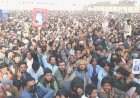
What we are witnessing is the total systemic failure of theocratic neoliberalism. Those occupying the streets are the dispossessed by the "Bonyads" (religious organizations) and the Revolutionary Guard (Sepah) mafia, which has monopolized capital accumulation since the 1979 revolution. Despite the country's immense rentier wealth, the masses have been systematically excluded. The driving force isn't merely "liberal civil liberties"; it is a demand for socio-economic justice and human dignity, as heard from the slogans on the streets.
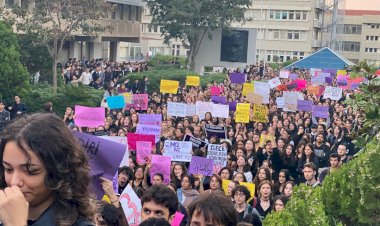
Pauperization has reached a terminal stage. With hyperinflation surpassing 50% and the devaluation of the national currency, the urban poor, the precariat, and women have formed a unified front of rage. This is not a classic secular bourgeois movement; it is a grassroots mobilization far more radicalized than previous cycles. The anger of the "Mustazafin" (the sans-culottes) has turned against a state that maintains its legitimacy through a facade of religious populism. We are seeing a structural crisis of Islamic state capitalism. This may have evolved into a pre-revolutionary situation, differing from the previous periodical uprisings, where the ruling class can no longer govern in the old way, and the middle classes no longer wish to be governed in the old way. Youth and students are also on the streets; these are the younger generations left without security or a future, including the children of opposition families. Even though the regime has closed campuses out of fear, they are engaging in protests in neighborhoods through methods like civil disobedience. I would also highlight the urban poor—those at the very bottom who cannot pay their rent and survive by scavenging for food at marketplaces; these neighborhoods are out on the streets. Women, of course, are out as well; they have always been the primary targets of the regime's heavy ideological pressure.
The workers, for now, are a 'giant' that has not yet exerted its power, adopting a 'wait and see' tactic. I should mention that while there are currently strikes in the oil industry, these have not yet merged with the current movement. This area carries truly serious potential. The politicization of the labor movement could deliver the final blow. Such a potential exists.
The "Bazaar" (the traditional petty bourgeoisie) was historically the regime's social base. Why has this class joined the opposition?
Indeed, there is a critical turning point here. Historically, the 'Bazaar' (the traditional petty bourgeoisie) was the financier of the Clerics (Mullahs) and the backbone of the regime. However, in the last 20 years, the Revolutionary Guard has monopolized trade by militarizing the economy. The traditional merchant has been crushed by military capital. Currently, the fact that the shopkeepers (Bazaar)—who no longer believe the regime represents their interests—are taking to the streets is the clearest indicator of the erosion of the regime's social base.
The breaking point corresponds to the exchange rate (Rial/Dollar) spiraling completely out of control. A shopkeeper cannot replace the goods in the afternoon that they sold in the morning. There is no belief that the government can solve this because the share of conglomerates controlled by the Revolutionary Guard (Bonyads) is immense, and the system works for them. Naturally, anger is directed toward the corrupt, enriched clerics. The merchants have realized that they have become direct competitors with the government and are being crushed in this rivalry. This is as much a cry against dispossession as it is a struggle for 'bread'; in other words, there is an objection here directed at the very foundations upon which the regime stands. For this exact reason, instead of initially confronting this group harshly, the regime tried to project a conciliatory image with phrases like 'we are listening' and 'we must solve this.
On December 10, the strikes by oil workers in South Pars and Asaluyeh took place with an energy not seen for many years. Strikes also occurred in sugar refineries and gold mines. Where does the working class stand within this movement? Has a bond been established between the street movement and the labor movement?
This dynamic certainly exists and is a result of the economic crisis promising nothing but poverty to the gas and oil workers, who are the producers of the country's largest source of income. In other words, both movements share the same roots. The labor movement has not yet taken a step to merge its power with the current movement; at least, this is the situation for now.
However, a political labor movement has never truly ceased in Iran. There are numerous examples: retirees, nurses, teachers, bus workers, and sugar workers who created major experiments in workers' councils, such as Haft Tappeh.
The strikes by oil, sugar, and gold workers constitute the most politicized strike wave since 1979. Workers are not merely demanding wage increases; they are calling for 'Workers' Control' and 'Independent Unions.' South Pars and Asaluyeh are the foreign exchange arteries of Iran. When the working class 'pulls the plug' there, the regime can neither sell oil abroad nor finance its army. The moment the working class combines the scattered energy of the street with the power to halt production, the regime collapses.
The Iranian people are accustomed to the streets. However, this time, the protests are geographically spread out in a way that falls outside the usual scenario. In previous waves of rebellion, massive crowds would persistently stay on the streets, especially in Tehran and Tabriz, but now these cities seem relatively quiet. What is the reason for this?
The 'relative' scarcity of crowds in centers like Tehran, Tabriz, and Isfahan is not a retreat; rather, it is a state of fragmentation occurring as monarchist supporters become visible in the protests. Places like Tabriz and Tehran are the strongholds of the left and anti-regime forces. On the other hand, the upper classes and economically more powerful segments are also located here. Among the anti-regime workers in major cities, there is suspicion toward this movement that began with the Bazaar merchants. The masses are cautious due to both historical codes and the uncertainty surrounding the movement's objectives. 'What will happen as a result of these protests?' This is the biggest question right now. The fact that no vision other than the return of the Shah has come to the fore keeps those who have repeatedly taken to the streets for freedom and democracy—giving their lives and blood—at a distance from the current movement.
However, sympathy for the protests is, of course, very high. The silence in the big cities is turning into the movement’s weakest point. A decisive blow against the regime is not possible through the fragmented nature of small rural towns alone. Iran’s rural areas are buckling under unemployment, drought, and ecological destruction. Small cities and villages, once considered the regime’s 'fortresses,' are now burning. There is no place to hide there; hunger is experienced nakedly and directly. When the regime concentrated its forces in Tehran and major cities, the provinces became the 'weak link.' This is causing a rhizomatic spread designed to stretch and break the regime’s defense line. While life in Tabriz and Tehran continues its normal course, we see a heavy presence of security forces everywhere. The people are watching silently, for now. I believe that as the duration of the small towns and provinces remaining on the streets increases, this reaction will spread toward the center.
Iran is facing direct threats of war. For the first time since the Iran-Iraq War, the capital was bombed by Israel for 12 days. Following the rogue operation in Venezuela, Iran has once again been threatened by Trump. What is the reflection of this imperialist pressure on the protests and among the people?
The Pahlavi slogans being whipped up on social media are the product of a 'memory gap' that has emerged in the absence of an organized leftist alternative. The youth and the general masses simply want to 'get rid of what currently exists.' This slogan arises from a very simple binary—'as long as the mullah regime goes, it doesn’t matter who replaces it'—because for decades, every attempt at leftist organization has been ruthlessly suppressed.
If the regime falls, a power vacuum will occur. Monarchism—which is kept in reserve by imperialism but actually lacks an organized structure inside Iran—is filling the ideological void created by this concrete reality. Although Shah supporters possess foreign-funded media power, you do not see them on the ground (in strikes, neighborhood committees, etc.). What exists there is the people's own self-organization.
Before the protests, a point had been reached in Iran where the mandatory hijab for women could no longer be enforced by the regime. What is the current situation for women in Iran?
The mandatory hijab is now effectively a rule only on paper. Women won this position at the cost of their lives. This issue is not merely about 'attire'; it is the heart of the regime's ideological reproduction. The hijab is the banner of political Islam; when it falls, the regime is left ideologically naked. At this point, women have achieved a de facto victory. In the streets of Tehran and other major cities, walking unveiled is no longer an act of civil disobedience—it is the new normal.
This situation, even if the state maintains a monopoly on violence, is another indicator of the total collapse of the mechanisms for producing social consent and a sign that the regime has entered a historical deadlock. By reclaiming control over their own bodies, women have dealt the greatest blow to patriarchal capitalism. In the current protests, despite the closure of universities, young women have once again become one of the most visible forces on the streets.
The regime appears squeezed under economic constraints, international pressure, and social backlash. What do you think are the possibilities for the future of the regime and the country?
The regime is currently in the "interregnum" (the period of crisis) that Gramsci spoke of—a time when "monsters" can emerge. However, the resistance of the Iranian people, especially the working class and women, holds a massive energy capable of pushing the wheel of history forward.
In short, the regime is trapped. I believe there are three scenarios for the future:
The first scenario is a military coup based on the "Egypt model." We now know with evidence—uncovered during the 12-Day War—the existence of Israeli agents and collaborators within Iran, and that the US and Israel are constantly trying to bribe or persuade people for a targeted regime change. The collapse of public support inevitably creates a desire for a "deal" even within the highest ranks of the regime. In such a case, a scenario like Assad fleeing to Russia, targeted assassinations within Iran, or a larger act of "banditry" like the Maduro example would not be surprising. On the other hand, if there is a military wing capable of managing an internal disintegration, this effectively becomes a military coup option. The Revolutionary Guard (IRGC) might purge the Clerics and reach an agreement with the West. The option for the regime's owners to switch sides without giving up their privileges, bringing Iran's oil resources and political system into alignment with Western imperialism, is currently the most likely outcome. This would, of course, mean a victory for imperialism in Iran and the consolidation of major power for Israel and the US in the region. It is a very dark picture; it means Western imperialism participating in the exploitation of the Iranian people and the looting of their resources. It means the Mullahs selling the country to the US for their own interests.
The second option is "decay" through imperialist encirclement, embargo, and the prolonged stagnation of the regime. This process, where the regime can neither be overthrown nor manage to govern, and where social decay and small-scale conflicts become chronic, could continue for a while. However, both the international conjuncture and the internal dynamics of Iranian society clearly show that this situation is not sustainable. Iran has reached a historical crossroads.
The third option is a labor revolution. The unification of workers' councils (shoras) and neighborhood committees to take power into the hands of the people would be the most optimistic scenario for the people of Iran and the Middle East. This is the path we are fighting for. In a country with resources as rich as Iran, poverty, lack of basic rights, and inequalities are too deep to be solved by a simple reshuffling within the system. When the system grants freedom, the people become revolutionary; when it suppresses them, rebellions explode. Whether the Mullahs go and someone else takes their place, these radical social dynamics will always exist as a threat to the ruling class. In such an era and geography of imperialist banditry, living in prosperity is already out of the question. While Mullah-type capitalism creates an illusion on this matter, those in the Middle East who long for a Western-type liberal democratic government are asking for the impossible. A revolution through which the working millions seize resources and power, serving as an inspiration and example to the rest of the Middle East, is the only true alternative that can solve the problems of both "bread and freedom." Other scenarios in today’s world offer the Iranian people a very bleak outlook.
The picture is this clear and this heavy. The Iranian people are not just vomiting out a government; they are vomiting out a system