

Imperialist Hypocrisy at Work in Syria, Rojava Under Fire! - Emre Güntekin
 Socialist
Jan 21, 2026 02:10
1831
Socialist
Jan 21, 2026 02:10
1831
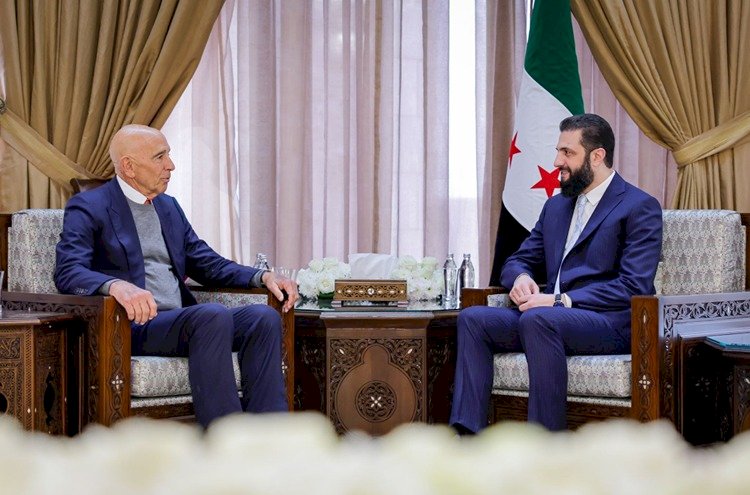
January 18, 2026 will be remembered as a critical turning point in shaping the future of the Kurdish people in Syria. Through HTS, acting with the approval of the United States and its allies, the groundwork was laid for the dismantling of the Kurdish people’s national gains in the country.
What unfolded can be summarized as follows:
The cities of Raqqa and Deir ez-Zor, which had previously been liberated from ISIS by the Syrian Democratic Forces, came under the control of regime forces. In these predominantly Arab-populated cities, the reconciliation of Arab tribes within the SDF with the regime significantly facilitated the advance of forces affiliated with the HTS administration. As a result, the SDF, which had been built on an alliance between the YPG and Arab tribal forces, effectively ceased to function as a unified force. In response to these developments, YPG leader Mazloum Abdi announced their withdrawal from both cities.
The country’s most important oil and natural gas fields, including al-Omar, Tanak, and Conoco, also fell under the control of regime forces.
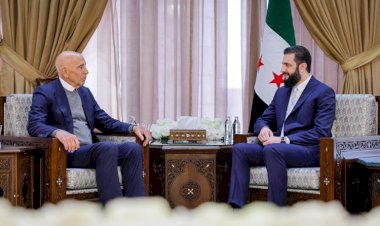
On the evening of January 18, Jolani announced that a 14-point agreement had been reached with the SDF following meetings that also included Tom Barrack, who was portrayed as President Trump’s colonial governor in the Middle East. According to the reported terms of the agreement, the SDF accepted withdrawing to the east of the Euphrates, transferring the administrative and military control of Raqqa and Deir ez-Zor to Damascus, handing over oil fields and border crossings to the central government, and allowing for the individual integration of its military personnel into the Syrian army. However, after talks held in Damascus on January 19 with the participation of Tom Barrack and SDF commander Mazloum Abdi, the SDF announced that no final agreement had been reached.
An Imposed Surrender for Rojava!
Statements from the SDF suggest that Damascus is seeking full capitulation. The conditions put forward by the Jolani administration are widely seen as nullifying the March 10 Agreement reached last year. The shift from division-level integration of the SDF into the Syrian army to individual enlistment; reported offers to the SDF of the Hasakah Governorship and to Mazloum Abdi of the post of Deputy Minister of Defense on the condition of severing ties with the PKK; and the stipulation that Interior Ministry forces loyal to Damascus remain present in the city despite leaving Hasakah’s administrative management to the SDF are all regarded as measures that would effectively dismantle Rojava’s political autonomy.
The Jolani administration rejected Mazloum Abdi’s request for a five-day period to consult with his commanders on the proposed conditions and demanded a final response by the end of the day. It warned that force would be used in Hasakah if no agreement was reached. Shortly thereafter, Hasakah and Kobane began to come under siege by regime forces. The Syrian Ministry of Awqaf issued a circular calling for victory celebrations in mosques, explicitly invoking Surah al-Anfal in a manner that evoked the memory of the Anfal Genocide, in which Saddam Hussein’s regime massacred 182,000 Kurds in 1988. In this way, attacks directed at the Kurdish people were cast in the atmosphere of a jihad.
Will the United States Hand Rojava Over to Damascus?
During clashes that took place yesterday, it was announced that Shaddadi Prison, located south of Hasakah, had fallen out of SDF control and that 1,500 ISIS detainees had escaped. At the same time, as these lines were being written, the siege around al-Aktan Prison, where ISIS militants from countries such as China, Uzbekistan, and Chechnya are being held, was continuing.
It is becoming increasingly clear that the United States, which has so far cooperated with the SDF in the fight against ISIS, is undergoing a shift in its position. The fact that, in a meeting attended by Tom Barrack and addressing the future of Syrian Kurds, the SDF leadership was seated at the same table as Masoud Barzani and the ENKS was a sign that the PYD-YPG was no longer regarded as the sole representative of the Kurdish people.
YPJ (Women’s Protection Units of Rojava) Commander Rohilat Efrin stated in an interview with Rudaw that Tom Barrack had previously given assurances to the SDF that it would remain a unified force and that the Kurds would be able to administer their own regions, yet displayed a markedly weak stance during the meetings held in Damascus. Following yesterday’s phone call between Trump and Jolani, Damascus was reportedly asked not to advance toward Hasakah; nevertheless, the attacks continued.
Will an all-out assault be launched against two Kurdish-majority cities such as Hasakah and Kobane?
As these lines were being written, regime forces had already begun attacks in Hasakah. Although the United States has, for the moment, sought to restrain Damascus, developments in Aleppo and other cities raise serious doubts about how sustainable this restraint will be. From the perspective of Washington and Tel Aviv, the Jolani administration has now reached a form deemed sufficiently acceptable; meanwhile, the stance of regional powers, particularly Saudi Arabia, has played a decisive role in the switching sides by Arab tribes within the SDF. For the Erdoğan administration as well, the desired outcome on the Syrian front has largely been achieved; a process has emerged in which conditions even more regressive than those envisaged under the March 10 Agreement are now being imposed, despite earlier acquiescence to that framework.
Will the Peace Process Continue in Turkey?
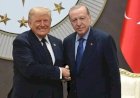
The dismantling of Rojava’s autonomy through imperialist intervention and its regional partners is bound to generate deep disappointment among Kurds in Turkey. The Erdoğan regime appears to have secured its objectives from Trump on Syria, following a period of warming relations in which Ankara has complied with Washington’s expectations on sensitive issues such as the Palestinian question. In previous years, the United States effectively authorized Turkey’s military presence west of the Euphrates, both through its own armed forces and via the Syrian National Army. Whether Turkey will be able to extract further gains through the Jolani regime it supports remains to be seen. Domestically, however, it is evident that Ankara will not hesitate to capitalize on the prestige derived from playing an active role in supporting the Jolani administration in the elimination of Kurdish autonomy in Syria.
One of the most decisive factors behind Erdoğan’s decision to enter the current process in partnership with Devlet Bahçeli was the Syrian question. A form of Kurdish autonomy backed by Israel had long been perceived as a national security threat, and at this juncture Israel, Turkey, and the United States have converged on a shared position regarding the dismantling of the Kurdish people’s gains. At a time when a potential attack on Iran is openly being discussed, U.S. imperialism is unwilling to leave behind a resentful Turkey and an unstable Syria.
So will the process continue in Turkey? The attacks witnessed on the streets yesterday were a stark reminder that the state’s approach to the Kurdish question remains firmly intact. Repressive policies remain readily available to the regime; whether the process continues in its current form will largely depend on how the Kurdish national movement responds to the dismantling of Rojava. Under either outcome, there is no credible prospect of an expansion of the Kurdish people’s national democratic rights.
In Turkey, the satisfaction displayed by nationalist circles that pride themselves on their commitment to “secularism” at the destruction of the Kurdish people’s gains in Syria is impossible to ignore. Living alongside a radical Islamist option such as the Jolani administration, and even the prospect of an ISIS-like barbarism returning to the battlefield, does not trouble these circles in the slightest. It is clear that such an attitude can only fuel hostility among peoples. The dismantling of the oppressed peoples’ gains at the hands of jihadist groups sanctioned by imperialism will bring nothing to the region’s populations but blood and tears.
In conclusion, it must be stated that in Syria the bells are tolling for all the oppressed, first and foremost the Kurdish people. A Jolani administration that crushes Kurdish gains, together with the radical Islamist militias aligned with it, will inevitably continue massacres against Alawites and other oppressed identities in Syria.
The Middle East has entered a period in which escape from a bloodbath transcends the struggle of any single people. The events of recent days have once again confirmed that the sweet promises of imperial powers are tied to immediate interests by nothing more than a fragile thread. It should also be noted that such betrayals are nothing new for the Kurdish people. From the crushing of the Mahabad Republic to the suppression of the Kurdistan Regional Government’s 2017 independence referendum by the Iraqi army, recent history is replete with such examples. History once again demonstrates that the realization of equality and freedom for all peoples, and an escape from this sea of blood, is possible only through an internationalist struggle and the fight for a socialist Middle East.