

The Current Situation in Rojava and a Brief Assessment – Güneş Gümüş
 Socialist
Feb 5, 2026 07:44
1691
Socialist
Feb 5, 2026 07:44
1691
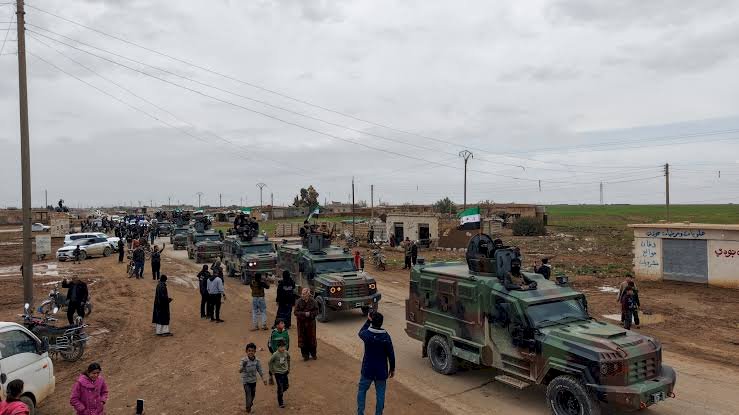
The offensive launched against the Kurdish neighborhoods of Aleppo on January 6th progressed rapidly in the following days, and with the quick defeats suffered, the SDF structure dissolved. What happened is not merely a military regression or a loss of position, but a historical rupture backwards for Kurdish national gains. With US approval and Ankara’s strategic support, the Jolani regime got what it wanted. The process experienced can be called the Kurds’ Nakba, because Kurds were hoping they could establish their own administration, homeland, proto-state, whatever you call it, in Rojava. As a historic step taken towards the liberation of Kurdistan across four parts, Rojava was a historical laboratory and a primary source of optimism. But suddenly, everything slipped away.
In a hostile geography surrounding it, when the US, the only international power the SDF relied on, said "this is the end of the line," Rojava’s fate was determined. After the agreement reached between the SDF and the Jolani regime on January 30th, it appears that what remains of Kurdish gains is a significantly narrowed and fragile sphere of influence in Kobani and Hasakah. Although the parties interpret the agreement from their own perspectives, it is a fact that the power lies in Damascus. From this point on, it is quite difficult for the scales to tip back in favor of the Kurdish forces.
While chauvinist segments in Turkey shouted with joy after the fall of Rojava, what fell to the Kurds was disappointment, loneliness, and new pains added to the heavy price already paid. In this environment, the first thing a revolutionary must do is show solidarity with the working Kurdish people. Without showing this sincerity, no matter how great your analyses are or how justified your criticisms, they will have no value in the eyes of Kurdish laborers and youth.
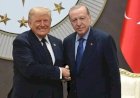
At the forefront of the lessons to be learned is the reality that the Kurdish people’s demand for national equality cannot reach a permanent and genuine solution within the structural limits of the imperialist-capitalist system and the hierarchy of bourgeois states. How will Kurds be able to determine their own destiny? Think about it: the state in Syria is collapsing, half a million people lose their lives in the civil war, and in this process, the SDF, appearing quite strong, establishes a "closest ally" relationship with the world superpower, the US, but ultimately the fate of the entire people lies between Trump’s two lips. The words of Tom Barrack, implying that they no longer needed the SDF, were not something to be swallowed easily; they must be etched into memory.
Didn't similar things happen to Barzani in 2017? Seeing the conditions where the fight against ISIS was ongoing as a historic opportunity, Barzani was left all alone when he put the referendum decision for independence into practice. The overconfidence that the West (especially the US) would protect them after a "yes" vote proved empty. The Iraqi army and the Shiite militia force Hashd al-Shaabi launched an operation into the "disputed territories" (especially Kirkuk) included in the scope of the referendum. Consequently, Peshmerga forces withdrew rapidly, and the Kurdistan Regional Government (KRG) lost Kirkuk, which provided more than half of its oil revenues, and other vast territories in just a few days. The regional economy collapsed, and the KRG became economically dependent on Baghdad. The referendum endangered all the gains Kurds had achieved in Iraq up to that day.
Similarly in Rojava, the great trust placed in US protection resulted in deep disappointment. It is clear that the Kurds’ right to self-determination will not be possible within the order of imperialist powers and existing bourgeois states. 150 years of experience has sufficiently proven this; the imperialist system, which has not been able to solve even the Cyprus issue for 150 years, has no capacity to solve a mega-issue like the Kurdish question. Nor does it have such a concern; the liberation of Kurds will not be possible without a socialist revolutionary wave that defeats imperialism and dissolves bourgeois states. This requires the united struggle of Kurdish, Turkish, Arab, and Persian laborers and youth. It is not a dream for the Middle Eastern youth, living in poverty and without a future, to meet under the flag of socialism; the material conditions for this exist. A political alternative must be constructed; a founding, equal, free Kurdistan is perfectly possible within a Socialist Middle East Federation. The path to freedom for the Kurdish people is closed within bourgeois borders; moreover, it involves the slaughter of nations, wars, ethnic cleansings, and genocides. This path is the path of the destruction of the weak; it is a bloody dead-end street for the oppressed.
On the other hand, one of the main points that needs to be criticized regarding the Rojava experience is constantly overlooked. During this long experience in which the SDF dominated a vast geography, it did not shake established social relations, did not touch property relations, and on the contrary, became part of the socio-economic status quo and power relations. This reality must be one of the fundamental starting points of socialist analysis; even if tons of praise are heaped upon the Rojava Revolution, a revolution cannot be limited to national/cultural/identity issues. Look, urban areas like Hasakah, Raqqa, Qamishli, Kobani, and the neighborhoods of Aleppo are quite large centers. These regions also have Syria’s most valuable economic resources. Had a socialist breakthrough occurred there, one that overturned existing social power relations, the resulting energy would have transcended the realm of identity politics. It would have radicalized Damascus, Latakia, Urfa, and Diyarbakır (Amed), influencing the entire region from Istanbul to Baghdad and Beirut. Only through such a transformation could the genuine comradeship of poor peasants and youth within Arab tribes, who eventually abandoned the SDF, have been secured. The hierarchical bonds between tribal elites and poor peasants can only be dissolved this way. But the SDF administration in Rojava and Öcalan’s democratic autonomy program are completely alien to a class-based ground, and in this form, they cannot be expected to implement a revolutionary socialist program. But at the very least, we did not even see a more populist, left-social democratic, left-populist administrative practice favoring the laborer. Indeed, a similar dynamic is evident in the local governance model of the DEM Party, particularly in its administration of the metropolitan municipalities of Amed and Van inside Turkey. Had a populist municipality embraced by the poor masses been exhibited in Amed and Van, it would be inevitable that the excitement, perspective, and dynamism emerging from there would shake all Western metropolises.
Today, due to the defeat suffered in Rojava, trust in Öcalan’s leadership has been shaken. But it is observed that the majority of Kurdish critics are more nationalist, more Barzani-ist, and reactive against the left. But basically, what do they propose other than relying on the US/Israel! Wasn't the SDF already in an intense relationship with the US? Wasn't Barzani also left in the lurch by the US in 2017? Look, today the US is preparing the Shah for a possible regime change in Iran, and the Shah’s program is a united Iran policy centered around Persian nationalism. Frankly, a Kurdish liberation project relying on the US or another imperialist power has no footing. On the contrary, the solution can come with a socialist revolutionary movement through the breaking of imperialist chains and national walls. The poor Kurdish people’s struggle for national equality must be combined with the struggle for class equality, and Kurdish laborers must be the primary vanguard element of an internationalist, egalitarian struggle alongside Arab and Turkish laborers