

Iran Caught Between the Mullah Regime, Imperialist Intervention, and Massacres - V. U. Arslan
 Socialist
Jan 13, 2026 09:03
1305
Socialist
Jan 13, 2026 09:03
1305
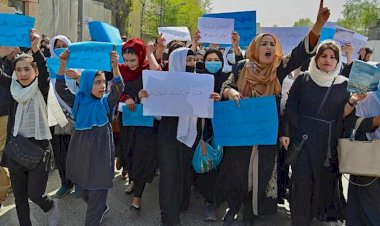
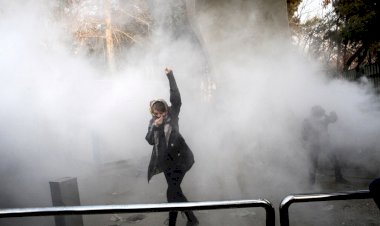
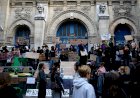
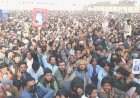
Iran has been shaken by large-scale popular uprisings and mass protests since December 28. The regime has shut down internet and phone communications. Unverified reports indicate that thousands may have been killed, while tens of thousands have been detained. The mullah regime is once again attempting to restore control by turning the streets into scenes of bloodshed. There is little indication that the authorities are trying to conceal the deaths. On the contrary, certain images appear to have been deliberately made public in order to intimidate the population. As Iran’s streets are once again drenched in blood, the prospect of a US and Israeli attack continues to loom in the background.
The Regime’s Ability to Govern and State Capacity Are Collapsing
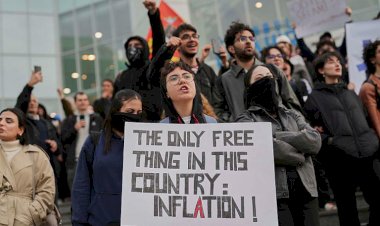
The immediate trigger that ignited decades of accumulated anger and volatile social tensions on December 28 was the historic collapse in the value of the Iranian rial. The exchange rate fell to as low as 1.5 million rials per dollar. Just ten years ago, one dollar was worth roughly 30,000 rials. As the economic collapse has struck traditional merchants (bazaaris) and the petty bourgeoisie with particular severity, the regime’s last remaining social pillars are now eroding. Indeed, these groups were among those who initially set the December 28 upheaval in motion. Poor and marginalized youth soon joined the protests, and with the participation of all social forces, ranging from national minorities to women, the demonstrations expanded and evolved into a full-scale uprising. Compared to the Mahsa Amini protests of 2022, the mullah regime today appears significantly more fragile.
Iran’s gross domestic product, which stood at 644 billion dollars in 2012, fell to an estimated 357 billion dollars in 2025 (according to worldometers.info). Over this period, at least 10 million additional people were pushed into deeper poverty. Recurrent electricity and water outages have made daily life increasingly unbearable. The regime’s attempt to attribute all of these problems to external sanctions has only deepened public anger. In an energy-rich country, there is no credible justification for the chronic neglect of electricity and water infrastructure. Experts estimate that approximately 35 percent of Tehran’s water supply is lost due to aging and leaking pipes. By any standard, this is a striking illustration of systemic decay.
During the Mahsa Amini uprising, the mullah regime deployed its instruments of repression, namely the Basij and the Islamic Revolutionary Guard Corps, with strong ideological motivation. Today, however, it is facing a far more paralyzing form of resistance. This is driven both by deepening divisions among the regime’s own elites and by the fact that security forces themselves are increasingly constrained by family ties that are directly affected by the economic crisis. As a result, the 2026 protests reveal a full-blown crisis of state capacity, one in which the regime has lost its ability to provide basic public services and can no longer substitute legitimacy with fear alone.
The Return of the Monarchy
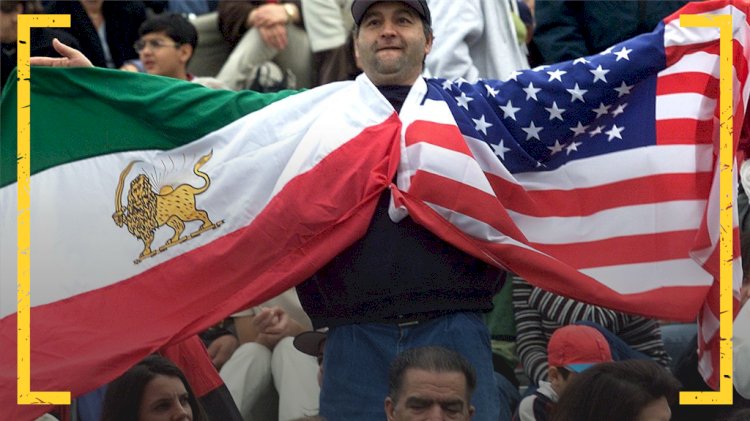
Unfortunately, the lack of organization and strategic vision once again emerges as the chronic weakness of popular uprisings. What has become unmistakably clear in this latest wave is a striking shift that the supporters of the Shah are more numerous and more visible than ever before. So much so that Reza Pahlavi, the eldest son of Iran’s last Shah, Mohammad Reza Pahlavi, and the exiled crown prince, has effectively risen to the status of a “natural leader” of the uprising. Why now? Historically, the Iranian opposition has been fragmented and largely leaderless. The public’s greatest fear has never been the collapse of the regime itself, but rather the chaos and uncertainty that might follow. It is precisely at this juncture that a political vacuum is forming around pro-monarchy forces. For many, the monarchy’s legacy appears as the only concrete and institutional alternative available to escape an Islamic Republic they deeply despise. The Shah’s close association with the United States and Israel positions him, in the eyes of some, as a figure capable of delivering stability after regime change. All of this has transformed a once deeply unpopular figure into a new center of political gravity. Even democratic actors who would otherwise have nothing to do with the Shah or the monarchy are increasingly inclined to support him, if only to see the mullah regime brought down.
On the other hand, the Shah’s status as a symbol of Persian nationalism provokes strong reactions from national groups such as Turks, Kurds, and Baluch. This, in turn, generates a counter-dynamic of resistance. The prospect of a monarchist movement, strongly backed by the United States and Israel, once again becoming a decisive force in shaping Iran’s future is deeply troubling. The Iranian people must not forget the massacres, systematic torture, and the role of SAVAK during the era of the Shah. Had socialists and broader left-wing forces been able to present a coherent and credible alternative, they might have been able to lead the immense energy currently visible on the streets. Instead, as the Iranian people struggle to free themselves from Islamist despotism, they are being steered toward another authoritarian outcome or toward a foreign-backed project of capitalist restoration. In the absence of an organized popular will, Iran’s future will be determined by bourgeois elites and imperial powers. For this reason, Iran’s fragmented and marginalized socialist forces must unite around the slogan “Neither Mullah nor Shah,” articulate a political vision capable of speaking directly to workers, youth, women, and oppressed nationalities, and present themselves as a genuine alternative. Otherwise, Iran will remain vulnerable in the aftermath of regime change to ethnic bloodshed, foreign intervention, and even occupation. Early warning signs are already visible in cities such as Urmia, where the foundations of Azeri–Kurdish ethnic tensions are being laid. Beyond this, even a nightmare scenario in which nearly every ethnic and sectarian group turns against one another cannot be ruled out. The slogan “Socialism or Barbarism” thus confronts us today, and particularly in Iran, as a stark and immediate reality.