

Iran as Laboratory, Empire as Mutation - Nida Kaveh
 Socialist
Apr 14, 2026 02:25
979
Socialist
Apr 14, 2026 02:25
979
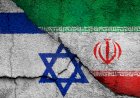
The war launched by the United States and Israel against Iran on February 28, 2026, is not an anomaly. It represents a structural condensation. We are witnessing a moment where the long duration of imperialism, its economic compulsions, its military forms, and its ideological masks, become visible in their most naked and destructive form. The initial joint strikes, dubbed Operation Epic Fury by the U.S. and Operation Roaring Lion by Israel, targeted Iran’s infrastructure, sovereignty, and leadership, culminating in the assassination of Supreme Leader Ayatollah Ali Khamenei.
Bourgeois media and liberal commentators initially framed this as a war of choice or a surgical intervention to eliminate a nuclear threat. However, a Marxist analysis must begin elsewhere: not with the stated intentions of political actors, but with the material base and the structural imperatives of global capital. Analyzing the fallout of the fragile temporary ceasefire of April 8, 2026, and the subsequent collapse of the peace talks in Pakistan led by U.S. Vice President JD Vance on April 12, reveals a fundamental truth. This conflict is less about Iran itself and entirely about the violent reproduction and ultimate mutation of a declining imperial order.
Hormuz and Disaster Capitalism
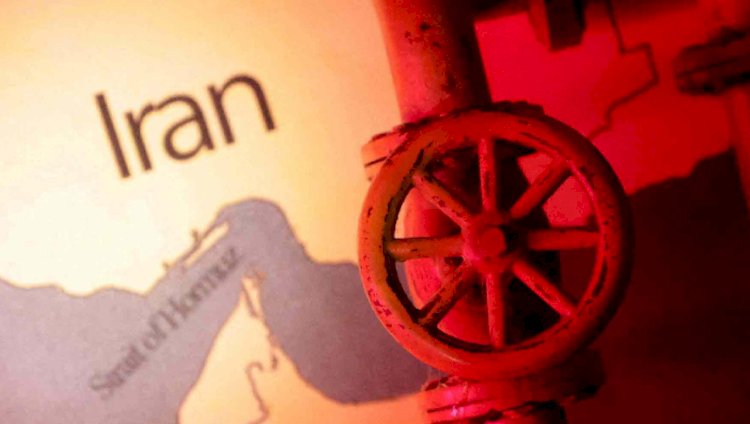
To understand the imperial desperation driving this conflict, one must view the crisis of U.S. hegemony as a historical tendency. The U.S. no longer acts as a global stabilizer. Instead, it acts as the violently flailing central node of a capitalist system struggling to maintain dominance over strategic chokepoints. Iran, by blockading the Strait of Hormuz in March 2026, placed a time bomb under the global capitalist economy. While mainstream analysis fixates on crude oil prices, a Marxist lens reveals a deeper systemic rot by focusing on multiple layers of the conflict. This framework rejects the myth of an absolute ruling class agenda and remains the only progressive method insofar as it opens the door to a revolutionary perspective: that imperialism is not invincible.
The Insurance Crisis: As of March 1, 2026, seven of the twelve major P&I clubs reclassified the Strait as a maximum war risk zone. War risk premiums surged by over 1,000 percent, effectively paralyzing global maritime logistics.
The Agrarian Crisis: The Strait is a bottleneck for over a quarter of the world’s ammonia exports and over 40 percent of traded urea and sulphur. The blockade immediately precipitated a massive agrarian crisis, disproportionately devastating the Global South with the looming threat of famine well into 2027.
Cannibalization for Profit: In the imperial core, this war serves as a massive transfer of public wealth to private defense monopolies. Companies like L3Harris, RTX, and Lockheed Martin have seen unprecedented windfalls. The fact that U.S. lawmakers, such as Senator Markwayne Mullin, secured massive returns on defense stocks leading up to the strikes exposes a system that actively monetizes global slaughter for the ruling class.
The Gaza Doctrine Goes Global
The relationship between the U.S. and Israel must be ruthlessly demystified. Israel functions structurally as a regional extension: a highly militarized garrison within a larger imperial hierarchy. Historically, Israel was the embodiment of imperial interests in the Middle East. The 2026 war represents the terrifying expansion of the Gaza Doctrine. It is no coincidence that Palestine, Syria, Lebanon, and Iran, all nations in contradiction with Western imperialism, are targets. Following the U.S. success in forcing regime change in Syria, the resulting power surge for Israel made a war against Iran an inevitable logical conclusion.
The opening weeks of the conflict signaled a fundamental shift in strategy. By targeting Law Enforcement Command sites and assassinating strategic naval officers like Alireza Tangsiri, the U.S. and Israel axis proved it no longer seeks to govern the periphery through traditional neocolonialism. Venezuela was the test case for this: a low risk operation to control resources. Regarding Iran, the Trump administration’s miscalculations surfaced quickly. While a Gaza scenario is applied to Cuba daily, Iran’s capacity as a regional power has frustrated a swift imperial victory. Trump’s April 12 threat to bomb water treatment facilities epitomizes this. The empire no longer seeks to build a society. It seeks to paralyze it by depriving it of the basic means of social reproduction. This is a strategy of conquest through destruction followed by a controlled withdrawal.
Iran as Imperial Laboratory and the Resistance Economy
Today, Iran is not merely a target. It is a laboratory. For decades, the Iranian people have been subjected to suffocating sanctions, proxy wars, and now, direct military assault. It is a testing ground for how much kinetic and economic pressure the imperial core can exert to reshape a society without the costs of a ground invasion. However, oppression generates its own negations. Instead of a rapid regime collapse, the laboratory has produced new global contradictions.
Networked Retaliation: The decapitation of Iran’s command did not halt the resistance. Instead, it liberated Tehran from strategic restraint. Iran struck residential and commercial districts in Dubai and major airport hubs in the UAE and Qatar, paralyzing allied capital. This pressure forced regional partners to panic and demand peace.
Asymmetric Extraction: Rather than a total shutdown, Iran transformed the Strait into a tool for selective economic gain, charging tolls exceeding 1,000,000 dollars per vessel. This proved that a peripheral state can successfully commodify global logistics without matching the imperial core plane for plane.
Disarray in the West and the Mutation of Capital
The war exposes a profound fracture within the global working class. Households in the U.S. and UK are absorbing the costs through spiraling prices, effectively subsidizing an imperial adventure that offers them no benefit. Simultaneously, the Western ruling class appears increasingly fragmented. The failure of the Islamabad negotiations unleashed partisan friction in the U.S., while the press attempts to mask this internal rot as mere policy failure, obscuring the reality that imperial decline is structurally baked into late stage capitalism.
Into the vacuum created by this crisis steps China. It enters not as a simple replacement hegemon, but as an entirely different modality of power. While Washington relies on gunboat diplomacy, Beijing is perfecting network diplomacy. China’s role has been cautious and strategic. While the U.S. projects power through military shock, China accumulates influence through infrastructural integration via the Belt and Road Initiative, financial substitution through de-dollarization, and geopolitical mediation as the rational manager of global capital.
The 2026 U.S. and Israel war on Iran marks a tectonic shift. Old Imperialism, with its obsession with territory and spectacular violence, is failing. It yields ruin without resolution. In its wake, a New Imperialism is rising: one built on networks, infrastructure, and economic integration. Iran stands at the intersection of these two eras, serving as the hot front for the terminal, violent restructuring of the global capitalist machine.