

After the Death of Habermas: The Limits of Deliberative Democracy
 Socialist
Mar 17, 2026 06:53
987
Socialist
Mar 17, 2026 06:53
987
by Güneş Gümüş
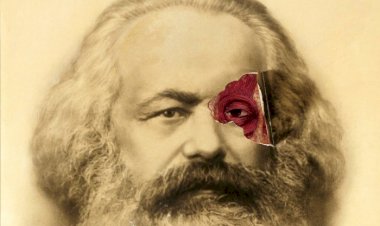
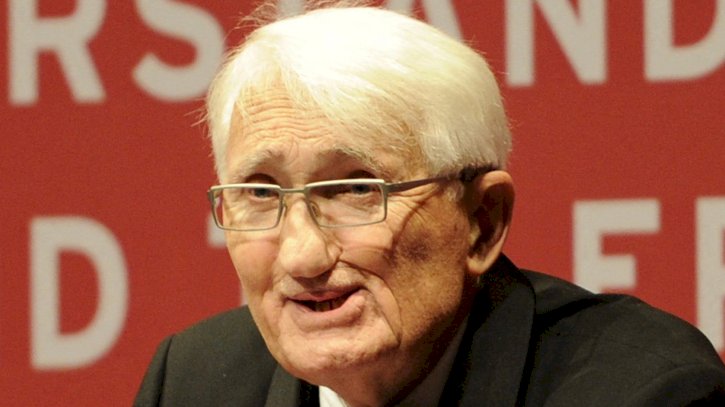
When Habermas passed away recently, he remained in memories associated with that unfortunate statement defending Israel's "right to strike" against Hamas while Palestinians were being subjected to genocide. Of course, an intellectual’s entire theoretical production cannot be discarded due to a single signature; however, when the actors he defends are Netanyahu and his administration—committed to drowning the Middle East and the world in blood—the resulting backlash becomes perfectly understandable.
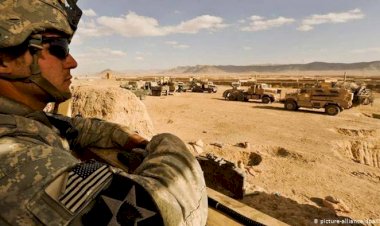
Habermas’s stance in support of Israel is not a mere "unfortunate slip"; it is a direct reflection of the "poison of democratism" that has held the Western Left captive for many years. Habermas is one of the primary architects of this bourgeois ideological influence that rendered a significant portion of the socialist movement in the West unresponsive while the US conducted invasions or regime-change operations in Afghanistan, Iraq, Libya, and Syria. If even today there is no powerful reaction from the West against the possibility of the US-Israeli imperialist bloc waging war on Iran, it is the work of post-Marxists who have no remaining link to Marxism other than the name.
Deliberative Democracy
Habermas is known as the last representative of the Frankfurt School’s "Critical Theory" tradition. However, unlike other theorists of the school, instead of putting the Enlightenment in the crosshairs, he evaluates it as an "unfinished project." He is not in favor of breaking away from modernity, which represents capitalism becoming a global civilization. Accepting the realities of Western soil as a universal experience, Habermas offers us deliberative democracy as the "missing piece" of our lives.
According to Habermas, the unique aspect of modernism is the separation of the state and the economy from the "lifeworld" (Lebenswelt). However, this separation is interrupted by factors such as the social state; the state and the economy (the system) are, so to speak, colonizing the lifeworld (family, culture, areas of debate). In his view, it is necessary to prevent the invasion of bureaucracy (power) and the economy (money) and to liberate the lifeworld from this systemic pressure. The way to achieve this is through deliberative democracy—a rational, communicative process in which all segments of society participate.
Public Sphere and Civil Society
Civil society must carry out a "siege operation" against the colonization of the lifeworld. Within this framework, Habermas introduced the concept of the "public sphere" (Öffentlichkeit) to the literature. This sphere is a platform for communication; through media, unions, associations, and forums, common issues are opened to rational debate and a common consensus is formed. The public opinion formed in this way establishes a regulatory power over parliament, government, and bureaucracy. In its simplest form, Habermas’s communicative rational action can be summarized this way.
A Theory Divorced from Reality
How much this picture resembles the radical democracy understanding of Laclau and Mouffe! The message is this: "Let capitalist relations continue in the economic sphere, there is no way to change that; let us only prevent capitalist logic from seeping into our daily lives." Laclau and Mouffe at least concerned themselves with breaking the determinative power of capitalism over the state; in Habermas, even that is absent. All that remains is to save the family, culture, and the network of individual relations! As if this were possible in a commodity economy that transforms the entire world according to its own interests...
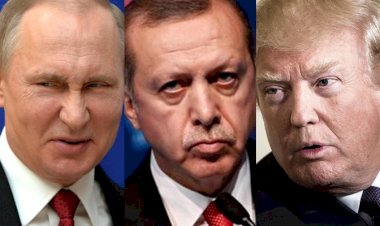
As if deliberative democracy will function through citizen forums... For example, during the Trump era, how much could communication focused on mutual understanding achieve against anti-immigrant units (ICE) that operated like special forces in Minneapolis? What Habermas is actually telling us is: "We are all in the same boat; we just lack communication based on understanding." Really? The ruling classes who drown the world in blood for the sake of profit do not behave this way because they possess "goal-oriented (instrumental) rationality"; on the contrary, these goals are the very ground that constitutes them. It is their interests that turn the ruling classes into the executors of brutal exploitation and oppression, internally and/or externally.
In the capitalist system, under the pressure of intense competition, those who exploit humans and nature most effectively prevail. If you want to maintain the advantage of being the power at the apex of imperialism and you are no longer at your former capacity, it is essential to eliminate the rival militarily and increase profitability by accessing more cheap raw materials and energy sources. This is how the strategic rationality of the bourgeoisie works.
Habermas’s understanding of deliberative democracy can only hold meaning in a small and privileged part of the world. The rest of the world is governed by authoritarian regimes for the sake of the interests of this "democratic" world. Unless the people take their rights by force, those at the top never care what they think. On the contrary, all the institutional apparatuses of coercion of the state continue to operate as a tradition to suppress the voice of the people.
As a final word: in advanced capitalist countries, the way to rule is not through the ruling classes constantly wielding the stick, but through the polishing of the system. The brightest layer of this polish is the lie that democracy can function in the interest of the people.