

Inside Iran | Interview: “The Decisive Factor is Both the Defeat of Imperialism and Whether the Working Classes Can Become an Independent Power
 Socialist
Mar 20, 2026 02:47
1104
Socialist
Mar 20, 2026 02:47
1104
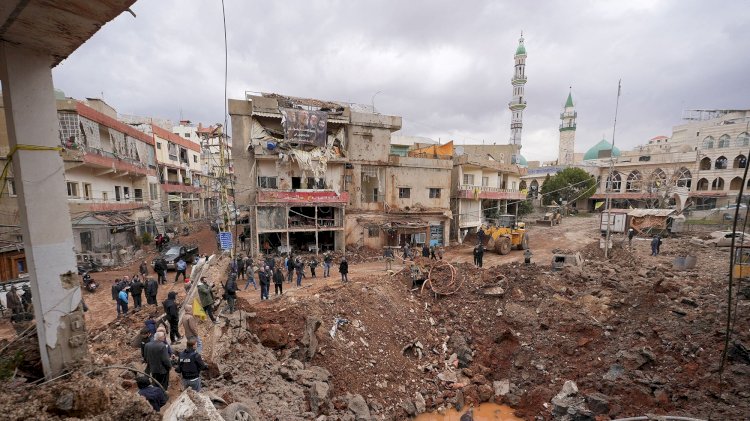
As the war enters its third week, Iranian Marxist Nida Kaveh, currently based in the country, provides an on-the-ground perspective on the domestic political pulse, the mounting humanitarian crisis, and the potential geopolitical scenarios ahead.
Hello. This is our third meeting since the mass uprising in December. In this tragic moment of history, we want to hear from you regarding the reality of the laborers in Iran, their conditions, and the political pulse. First of all, a terrible bombardment is ongoing. What is the humanitarian situation in Iran? We would like to hear about daily life in Iran first.
Today, life in Iran has taken the form of a crisis where "hot war" and a "war economy" merge with a "sanctions economy" in the classical sense. The US-Israeli bombardments have targeted not only military objectives but also energy infrastructure and civilian areas; US-Israeli imperialism claims to be targeting the regime, but thousands of civilians have already been killed. Our people are being killed and our cities are being destroyed.
Furthermore, the humanitarian picture in Iran must be read through concrete class reality, not abstract figures. For example, those who lost their lives as a result of the bombardment in the city of Sulduz (Naghadeh) were not "military targets," but directly workers and laborers. Such cases show us that along with generals, it is children, workers, ordinay workers, and innocent people who are dying. The essence of the war is clear: the imperialist war is not fought between classes; it is carried out for the interests of the ruling classes over the blood of the working classes. Events like those in Sulduz and Minab alone debunk the claims that the war is a "surgical operation." Because the reality is this: bombardments inevitably hit the most vulnerable—children, women, and workers.
Therefore, when describing daily life in Iran, we can now state this sentence more clearly: While the war in Iran may appear as a geopolitical chess game on television screens, in reality, it is a story of the destruction of children, workers, women, and the oppressed in general in Sulduz, Tabriz, Ahvaz, the suburbs of Tehran, and all over the country.
Regarding the material reality of daily life, existence is currently fragmented across a tripartite axis of crisis. First, a systemic economic collapse—fueled by hyperinflation, currency devaluation, and wartime scarcities—has precipitated a state of severe impoverishment. This is compounded by a structural infrastructure failure, where disruptions to energy, transport, and essential services have shifted from temporary setbacks to a permanent state of emergency. Finally, life is defined by a condition of existential precarity, as aerial bombardments, physical destruction, and systematic digital isolation through internet blackouts become the new domestic norm. Ultimately, the Iranian working class finds itself trapped in a pincer movement, squeezed between the internal repression of the bourgeois state and the external devastation of the imperialist offensive.
So, what does the public think about the war? The Western media shows us the diaspora and monarchist groups thanking the US and Israel, using this to justify their massacres. If we wanted to realistically depict the position of the Iranian people regarding the war and imperialism, what would you tell us? Are the Iranian people in "a state of joy"?
The picture presented by the Western media—"a people seeing the US-Israel as saviors"—is largely an ideological fabrication. According to independent analyses, the real picture is much more contradictory: a significant portion of the Iranian people is against the regime, but they are simultaneously against the imperialist attack. This dual situation is critical.
I should also add that some war supporters changed sides after facing concrete realities as the war dragged on. Imperialist propaganda tries to turn anti-regime discontent in its own favor. Indeed, social analyses describe this situation clearly: the US and Israel use the rhetoric of "freedom" to legitimize a regime-change agenda, but this carries the risk of the kind of destruction we saw in Iraq and Libya. Therefore, the answer is clear: No, the Iranian people are not "in joy." There is neither a homogeneous mass supporting the regime, nor a majority applauding the imperialist attack.
The people, who are under constant bombardment by the US and Israel, were part of a serious wave of protests in December. There are thousands of dead. While mourning and war are intertwined, we are curious about the mood and political situation of the general segments opposed to the regime.
The war has not strengthened the opposition in Iran—on the contrary, it has intensified repression. Leftist academics and activists have been arrested. The state uses the war as an excuse to suppress internal opposition. Every type of organization has taken a serious hit. External war is turning into a tool to suppress the class struggle inside.
Today, among the anti-regime segments in Iran, there is: anger against the regime, the fear of living face-to-face with death under war bombardment and the regime’s increasing ruthlessness, and a disgust for imperialism. Therefore, the political mood is fragmented, cautious, and suppressed. Imperialism has done us the greatest possible evil; it hasn't just choked the people’s windpipe, but by shifting the priority to the fear of death, it has caused all progressive forces to retreat harshly.
From the outside, it seems the Iranian regime was well-prepared for this war scenario. Despite the loss of leadership, it can put up military resistance and, most importantly, mobilize the masses. Could this mean an extension of the regime's lifespan?
In the short term: Yes, most likely. Because the "national defense" discourse creates mass mobilization, and nationalism grows stronger, the regime converts the justified anger against imperialism into an alignment behind itself. When the priority becomes an external threat, internal contradictions are suppressed; the regime reproduces its legitimacy by utilizing its military capacity. The Iranian administration can still show military resistance and mobilize the masses. However, if we look deeper, I don’t believe this means the regime is growing stronger; it only means the decay is being postponed.
In your previous interview, you mentioned three scenarios for Iran: the first is an Egyptian-model military coup. The second is the decay that will emerge through imperialist encirclement, embargo, and the extension of the regime’s life. The third option is a workers' revolution. It seems Iran is facing the realization of the second option. What are the predictions regarding the country's future?
Currently, the most likely scenario is indeed the second one, as you said: long-term constriction and decay. There are also differences in commentary and approach on this issue. According to one view, the prolonged war and imperialist sanctions will bring economic collapse, which will lead to the weakening of the state; this will raise the risk of regional fragmentation and the possibility of Libya-type chaos. This scenario presents a pessimistic picture; the rulers have the potential to realize this. All they want is to eliminate the regional hegemonic weaknesses left over from the last century in the Middle East. Within this historical goal, we, the peoples, are merely a detail. No one can say the scenario of fragmentation, civil war, and barbarism is impossible, but "the tree of life is green." The Iranian people’s culture of resistance and struggle is strong. That is, the third option you mentioned—a workers' revolution—is still historically on the table. But the biggest obstacle to this is that the organized forces of the Left inside, who have been given no room to breathe due to state repression, are very weak. And the chaos created by imperialist intervention—contrary to what a group of "useful idiots," including some self-proclaimed leftists, claim—suffocates the possibility of revolution rather than accelerating it.
There is no need to be pessimistic. In these extraordinary times, revolutionary possibilities also carry the potential to become reality. History is full of countless examples of this. But this is possible not through a one-sided rise of a revolutionary possibility within Iran, but through an internationalist anti-imperialist struggle dynamic creating a revolutionary wave of struggle. While fighting for the defeat of the US in the region, one must strive for this to develop around an independent class consciousness. The Western working class must raise its voice most strongly for the defeat of its own ruling classes; in this way, a concrete power relationship must emerge showing the Iranian people that they should bind their fate to the workers of the world. The fact that anti-war actions are currently weak is what truly makes us weak. That is why war periods are very critical. An exit from this suffocating atmosphere, which pushes the Iranian people toward the right, monarchism, or behind the regime, is possible only with the blowing of this internationalist wind.
Finally, let's touch upon a very important issue: What stance is the Iranian Left taking toward the imperialist aggression against the country? What are the unions saying? Is there an ambivalent, centist stance, or a clear anti-imperialist one?
Here, the picture is again contradictory, but the anti-imperialist standing is quite strong. While the US-Israeli attack is clearly rejected, this is of course done without giving support to the regime: the "Neither Imperialism nor Theocracy" line exists. In a country targeted by the primary imperialist power, a line of nationalist defense or defense of the bourgeois state can easily emerge alongside anti-imperialism. This would be a class-enemy position, implying a partnership of fate between the working masses and the ruling class. Wanting the defeat of imperialism and supporting the Iranian regime are not the same thing. This point is very important. I think the Iranian Left is passing this test well: they are both opposing the imperialist war and doing so while continuing the struggle against the local ruling class. However, there are "useful idiots" in this regard as well: some "leftist" trends justify the war through "anti-regime" rhetoric or by repeating imperialist discourses. Naturally, they are losing favor in the eyes of the people quite harshly. Liberalism, obsessed with "democratism" is a nuisance everywhere. Those who rely on any power other than the self-power of the Iranian people and workers only serve the system.
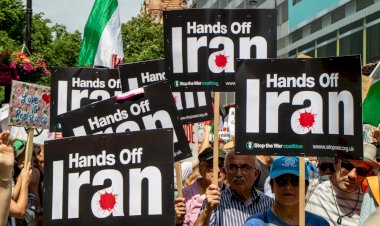
Imperialist war brings no freedom, no salvation. The future of Iran will be decided neither in Washington nor in Tehran. What is decisive is not only the defeat of imperialism, but whether the laboring classes can emerge as an independent force.
RELATED:
Inside Iran: “This struggle requires international socialist solidarity, class perspective, and historical patience”
Iranian Marxist Nida Kaveh: “The Protestors Now Include the Pious Uncles”
Iran Caught Between the Mullah Regime, Imperialist Intervention, and Massacres - V. U. Arslan
Interview | The Iranian Left, the Labor Movement, and the Future of Iran