

France’s Youth in Revolt: “The Movement Must Reach Out to the Working Class”
 Socialist
Oct 5, 2026 03:11
6
Socialist
Oct 5, 2026 03:11
6
We spoke with Hugo, a leader of the youth wing of the NPA-R, the revolutionary party fighting in France, about the high school student rebellion that began in poor neighborhoods and spread throughout the country.
What are the demands of the radical student protests that began in the Paris suburbs and quickly spread to other cities? Why has this wave of revolt emerged now? How has Macron responded to the protests?
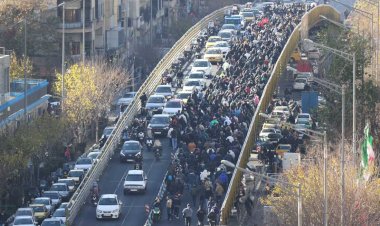
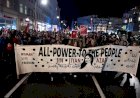
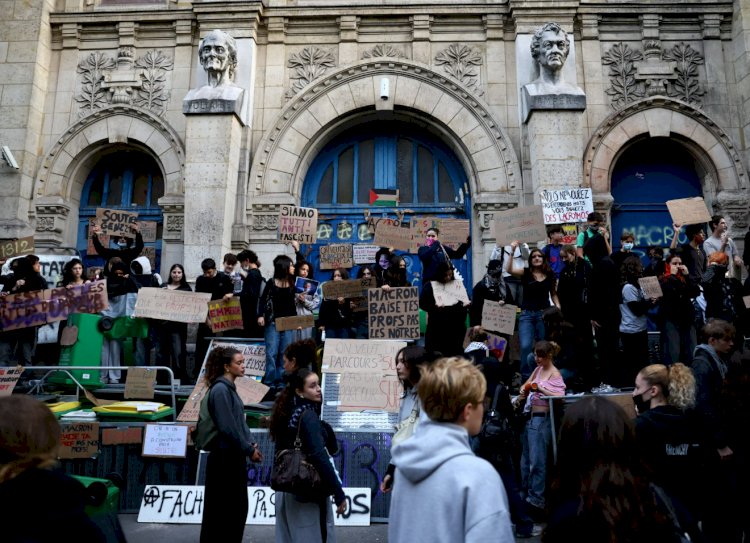
The high school students’ movement started in the Paris suburbs, in working-class neighborhoods. On the students’ signs, we could read slogans about budget cuts, the lack of resources in the schools or criticism on “meritocraty”. But more deeply, a strong anger is being expressed against inequalities and a two-tiered school system. The students ask for more resources, the hiring of more teachers etc. But they also demand respect and dignity, in particular, young people from immigrant backgrounds who live in poor suburbs and feel as though they are treated as second-class citizens.
The movement quickly spread, including to the wealthier high schools in downtown areas. The unprecedented mobilization of young people from very working-class neighborhoods is fueling political discussions. Divisions may arise among petit-bourgeois high school students committed to carrying out “peaceful” actions and who are distancing themselves from the “rioters”. But there are also young people who are actively seeking to overcome these divisions. They are aware that the police crack down harder on the suburbs youth and that this division weakens the movement.
Since September, it has been clear that the social situation is particularly tense, especially with the rise in fuel prices. There have been various calls for the return of the Yellow Vests. But the surge in the high school student movement has come as a surprise in this rather tense social climate. The government reacted harshly by sending in the police to break up the high school blockades. They made extensive use of tear gas and rubber bullets. On October 1 alone, 1,949 young people were arrested. That’s more than on the most tense day of the Yellow Vests movement, December 8, 2019. Currently, the Education minister is closing high schools and switching classes to online learning. They are doing everything they can to quell the uprising and prevent it from spreading to other segments of the population
To what extent are trade unions and public-sector workers connected to these mobilizations? For example, how are teachers’ unions and other unions responding to the demands around education?
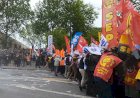
Many education workers have shown their support for high school students. Some teachers went on strike, and some of them joined the blocades. Teachers' unions are currently calling for a national strike on October 6 in support of the high school student movement and its demands. But this call comes a little too late, as high school students have been protesting for over a week. And, more importantly, it is directed only at education workers. In May 1968, the unions called for a strike in solidarity with the students who were being repressed by the police. But today, the labor unions remain passive—even as workers face an unprecedented social offensive and their children are beaten and repressed by the police.
More broadly, what level of support do these protests have among the French public?
There is a strong propaganda campaign by the media and the government that seeks to portray high school students as “rioters” with no political demands—or even as being manipulated by political parties. In particular, they emphasize the violent nature of the movement and encourage people to condemn it. This speech may be echoed by some workers who view these young people as hooligans who break everything. But there are also many workers who feel solidarity with the high school students—especially those who have already taken part in social movements, such as the Yellow Vests, and who know that media propaganda aims to discredit these movements. And they can clearly see that young people's concerns mirror their own. High school students may have opened a breach that workers could rush through. But the movement would need to actively reach out to the working class.
At universities, while the situation was relatively calm at the start of the school year, more and more students are considering joining the high school students. We’ve seen quite a few students at the high school protests. There have been a few campus blockades. But with the government effectively shutting down high schools, perhaps we should instead open up the universities to high school students so they can continue to mobilize. The first attempts to hold general assemblies at universities appear to be a success. In Nantes, 600 students gathered to organize the movement on their campus. And in other cities, student assemblies are planned for next week.
How is such a widespread student movement being coordinated? How is the left intervening in these mobilizations?
The movement spread spontaneously. The forms of organization vary widely depending on the location. Sometimes activist groups act independently, without seeking to organize the movement. Sometimes it is possible to hold general assemblies in high schools. Sometimes there are no general assemblies, but rather inter-school meetings with representatives from different schools… Wherever possible, NPA-R activists work to ensure that the movement organizes itself at the grassroots level and coordinates its efforts. In Paris, for example, there was an inter-high-school general assembly that brought together about 50 high school students from 20 different schools. In Bordeaux, an inter-high school general assembly was held, bringing together about 1,000 high school students. These discussion frameworks enable high school students to make decisions, such as organizing events in their towns. But for now, there is no coordination at the national level.
In the media, high school students are portrayed as being “manipulated by La France Insoumise” (FI), Mélenchon’s party. In reality, the FI supports high school students and is calling for the movement to expand. While they are very popular among young people, they are far from controlling the movement, which remains unpredictable in many ways. But people listen to them. They are sending their parliament members to the high school blockades to show their support. But once there, the representatives focus mainly on defusing tensions with the police and calling on the students to remain calm.
Do you think student unions and grassroots coordination bodies have the strength to win the movement’s demands?
The brutality of the crackdown shows us one thing: the government is afraid. By sending the cops to terrorize the young people, it hoped to nip the movement in the bud. Now it's ordering schools to close. The next step could be to grant some of the movement's demands. But if high school students want to prevent their struggle from being sold out for a pittance, they must strengthen their organization. They must have control over their movements
Faced with the police on their own, high school students remain vulnerable. If the movement is to succeed, it must manage to draw the rest of the students and workers into the struggle. This would be not only an opportunity to force Macron to back down, but also to deal a defeat to the bourgeoisie and counter its social offensive. Yes, the movement can win. But as it grows, the possibilities expand, because people feel stronger. To give an example, the carbon tax—which had brought the Yellow Vests out onto the streets in 2019—was scrapped after a few weeks of protests. But people stayed in the streets and came up with new demands because they held the upper hand at that point.
If we consider the recent developments alongside the broader issues unfolding across Europe, such as the social backlash against rising military budgets in Germany and the housing-rights mobilizations in Spain, what can we say about the potential for class struggle across Europe in the near future?
For now, people don't talk much about what's happening in other European countries. Social conditions are deteriorating across the entire continent, though at different rates and within different political contexts. Despite the existence of a high school student movement in Germany, there are very few connections. But what's happening in France is making headlines abroad. In my city, Lille, high school students showed me photos of the protests at their school that had been published by The New York Times. In Belgium, high schoolers have begun blocking their schools, inspired by the movement in France. So if the movement spreads, it could inspire others. The overall social context is favorable to this.
What is the situation regarding the upcoming elections in France? In Germany, we are seeing political polarization, with the far right and the reformist left gaining ground simultaneously. What is the situation in France?
At the start of the school year, many of our discussions centered on the elections, whereas we emphasized the idea that we shouldn't “wait until 2027” to take action. People on the left—whether at universities or in labor unions—are very concerned about the possibility of Le Pen coming to power. In the polls, the possibility of a Mélenchon-Le Pen runoff is presented as a credible scenario. So even though this circle may be receptive to our ideas, the pressure to vote for Mélenchon is very strong.
A social movement in this election context would quickly face a question: what political outlet for the movement? The bourgeois parties will certainly present the election as an opportunity for the struggle. We will therefore have to fight to promote alternatives to the reformists’ electoral solutions.
What is the NPA-R’s programme regarding the current youth revolt and the upcoming elections? What do you propose?
As I said, we want the movement to be organized at the grassroots level, coordinated on a national scale, and to reach out to the rest of society. We are working to organize general assemblies and coordination efforts in the cities where we are active.
n the upcoming elections, our campaign will reflect what we stand for every day. It will be a working-class candidacy, championing a platform of struggles for the working world. Our comrade and candidate Selma Labib, a bus driver in the Paris region, will advocate the idea that it is up to the workers themselves to fight to change their lives. This program of struggles is a program for open borders, for a ban on layoffs, for wages that keep pace with inflation… For workers’ control over the affairs of capitalists, the state, and all aspects of social life. For workers’ power and international solidarity among the exploited.