

What Does the “Framework Law” Really Frame?- Güneş Gümüş
 Socialist
Aug 6, 2026 03:41
333
Socialist
Aug 6, 2026 03:41
333
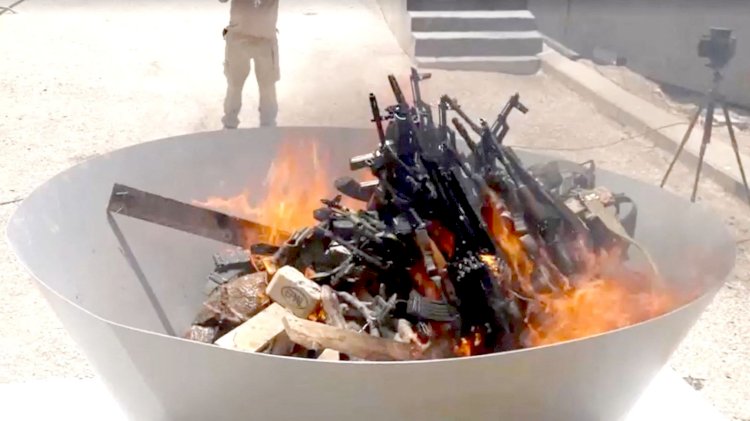
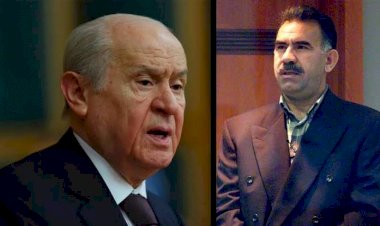
The "negotiation process," which entered the public agenda following Devlet Bahçeli's (leader of the fascist Nationalist Movement Party (MHP), president Erdoğan's coalition partner) call in early October 2024, PKK leader Abdullah Öcalan also supported this process, and the organization responded with a symbolic weapons burning ceremony by the guerrillas. Now, the process has finally been given a concrete form after two years of delay by a law.
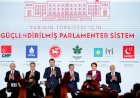
The "Bill on Strengthening National Solidarity and Social Cohesion," known publicly as the "Framework Law," prepared within the framework of what the government calls the "Türkiye Free from Terrorism" process, is coming to parliament. It has done so through a legislative amendment whose contents were unknown even to the members of parliament who signed it before its introduction.
Although its implementation may take another year, the measure does not establish an amnesty for the cadres or leadership of the Kurdish national movement. Instead, it offers only a limited suspension of sentences. Investigations and prosecutions are postponed according to the length of the anticipated sentence, while remaining exempt from the statute of limitations. In other words, as the entire country is effectively being turned into an open prison, this mechanism makes it easier to send those who step beyond the boundaries drawn by the government back behind bars, producing a new generation of "political hostages." Yet this is being marketed as the "framework law" of the negotiation process. As is well known, Erdoğan’s government continues to set new lows when it comes to political hostage-taking and blackmail.
The negotiation process between Öcalan and the Turkish state contains no agenda, plan, or commitment regarding the Kurdish people's national and democratic rights. The release of prisoners is, of course, important. Yet we know that under the current dictatorship, the AKP would have little difficulty filling those prisons with Kurdish prisoners once again whenever it sees fit. It should not be forgotten that only three years ago, President Recep Tayyip Erdoğan built his entire election campaign around the slogan "CHPKK," (a derogatory slogan that fused the acronyms of the Republican People's Party (CHP) and the Kurdistan Workers' Party (PKK)) in an effort to portray the opposition as aligned with the PKK, and secured victory by fostering an ultra chauvinist and anti Kurdish political climate. There is little need to elaborate on the true character of the AKP-MHP bloc.
Even if its implementation were to begin today, we are talking about a process that would take years to complete. Yet within the next year, or at most two, the country's political trajectory will reach a decisive turning point, bringing about a regime change. As the AKP navigates this critical juncture, it must contend with the broader social opposition. It is precisely at this difficult moment that the Kurdish political dynamic, one of the most energetic and mass-based forces within the social opposition, is being separated from the wider opposition movement. The People's Equality and Democracy Party (DEM Party- the main Kurdish national party) is, in practice, being removed from its role as an opposition party. Under such circumstances, the DEM Party can't take actions that would genuinely challenge or seriously trouble President Recep Tayyip Erdoğan. We all know it…
Moreover, this latest negotiation process is not an agreement that emerged from a balance of power or a military and political stalemate. That is precisely what distinguishes it from previous rounds of negotiations. Government officials repeatedly emphasize this point in order to reassure their nationalist base. For that reason, the current process bears far greater resemblance to the peace process with the Revolutionary Armed Forces of Colombia (FARC) than to the 1998 Good Friday Agreement in Northern Ireland. In reality, however, the present situation falls well short even of the Colombian case. The fact that disarmament has been established as a precondition is itself a manifestation of this deeply asymmetrical balance of power.
The Kurdish people's national and democratic gains are inseparably linked to broader democratic rights. But even if one were to assume otherwise, adopting a blunt nationalist reflex and arguing, "Let the Kurds look after their own affairs. Why should we concern ourselves with the rest of the country?", the obvious question would still be: what, exactly, are the Kurds gaining? After all, while the "process" has been unfolding, were the historic gains achieved by the Kurds in Rojava not dismantled through the actions of the AKP government? This example lays bare the true nature of the process with unmistakable clarity.
The AKP government is making its final moves to bring the "Republic" chapter in Turkey's history to a definitive close. Throughout its twenty-four years in power, it has sustained its rule through the alliances it forged and the advantages those alliances provided. Once it had successfully navigated each critical turning point, however, it discarded or eliminated its partners one by one. Today, the Kurdish national movement is heading toward the same trap.
The government's social hegemony has collapsed. It now survives only through coercion, even to the point of effectively stripping citizens of their right to vote and stand for election. If it succeeds in overcoming this latest turning point as well, Öcalan’s cadres and the DEM Party will have virtually no room left to manoeuvre. They will be unable to step outside the course laid down by the government. Of course, even under such circumstances, the Kurdish people will find new paths and new channels for struggle.
From the AKP perspective, the purpose of the process is precisely to prevent the convergence of street-level protest by ending the Kurdish movement's opposition to the government at the very moment it is navigating this historic turning point, that is, while consolidating a one-party, one-man regime. Devlet Bahçeli's role within this arrangement, however, is driven by a different calculation: As the geopolitical order in the Middle East is being reshaped, he seeks to seize the opportunity to rid the state of what he sees as the burden of an armed Kurdish movement and, while Abdullah Öcalan is still alive, to make use of his influence toward that end. After all, nothing has been conceded to the Kurds, so there is little reason for concern on their side. The dynamic of advance and restraint between President Recep Tayyip Erdoğan and Bahçeli requires a methodology capable of managing objectives that are not mutually contradictory, and, judging by the results so far, they have been remarkably successful in doing so.
The International Dimension
Indeed, at this point, the broader regional context behind the process also becomes apparent. The approach advanced by Tom Barrack, the United States Ambassador to Turkey and, until recently, the U.S. Special Envoy for Syria, who spoke of Turkey in terms befitting a colonial governor by proposing a "benevolent monarchy" and an "Ottoman millet system," strikingly mirrors Devlet Bahçeli's proposal for Alevi and Kurdish vice presidents. What a coincidence! Both point to the same solution: abandoning the officially egalitarian framework of the nation state, however largely confined to paper, in favor of an authoritarian superstructure that "represents" different identities through symbolic positions at the apex of the state while denying them any collective rights or autonomy at the societal level.
It is, of course, true that the nation-state is ultimately a political form that ought to be transcended. But this cannot be achieved by returning to the Ottoman millet system, grounded in the logic of subjects whose existence depended on the sultan's favor. Such a course would not represent a progressive transcendence but a regression, replacing the demand for equal citizenship with a renewed hierarchical regime of "tolerance" (echoing the long-standing portrayal of the Ottoman millet system in dominant Turkish historiography as a supposedly "tolerant" order).
Moreover, the true nature of U.S. imperialism's approach to the Kurds is already plainly visible in Syria. Tom Barrack's openly dismissive remarks regarding the historic gains achieved in Rojava, together with his declaration that the Syrian Democratic Forces (SDF) had fulfilled their role as the United States' principal partner in the fight against the Islamic State (ISIS), and that the "greatest opportunity" for the Kurds now lay in integrating into the new government led by Ahmed al-Sharaa, make Washington's position unmistakably clear. The United States regards the Kurds as a useful ally when circumstances require it and as a bargaining chip whenever it serves its interests. It did not hesitate to sacrifice the Kurdish forces to al-Sharaa today. It would be naïve to believe that the same logic is not at work in Turkey.
Socialists will actively participate in the struggle for democratic rights against the dictatorship in Türkiye, support the Kurdish people's decades-long struggle for national and democratic equality, but will link this struggle to the broader aspirations of the working class and to an independent class position.