

From the Streets of Europe and War - Nida Kaveh
 Socialist
Oct 19, 2026 11:31
31
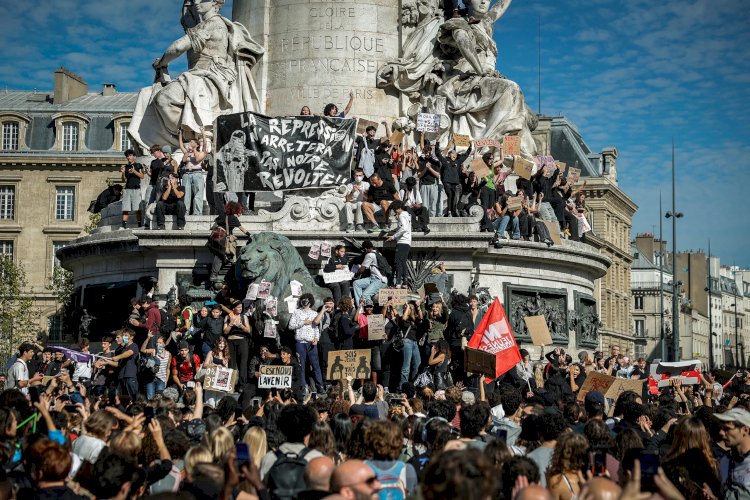
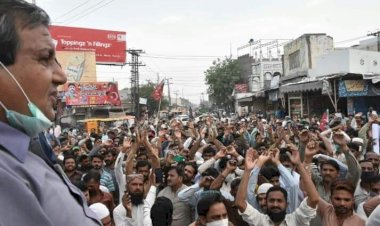
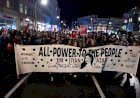
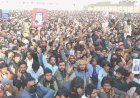
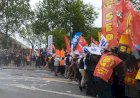
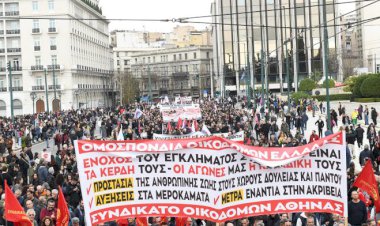
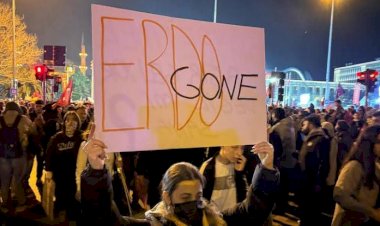
The protests spreading across Europe reflect a crisis that extends beyond individual governments. Rising living costs, housing insecurity, stagnant wages, deteriorating public services, and austerity have intensified the contradictions of contemporary capitalism. The war against Iran adds another dimension to this crisis, exposing the relationship between militarization, economic instability, and the unequal distribution of social costs.
From a Marxist perspective, the central question is not simply why people are protesting, but whether their anger can develop into an organized political force capable of transforming the conditions that produce their grievances.
War and Economy
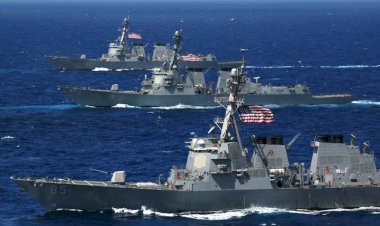
The US-Israeli war against Iran demonstrates how geopolitical conflicts can affect the lives of working people far beyond the battlefield. Disruptions to energy supplies, shipping, and regional trade can increase economic pressure across Europe, while governments face competing demands over military expenditure and social spending.
These costs are not distributed equally. Wealthier households can absorb rising prices more easily, while workers and low-income families must sacrifice essential needs. Meanwhile, governments often present spending cuts as unavoidable economic necessities while treating military expansion as a strategic imperative.
This contradiction reveals that public budgets are political choices, not neutral accounting exercises. The question is whose interests those choices serve.
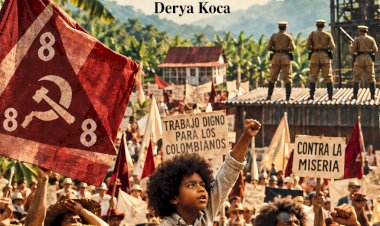
The left must therefore connect opposition to war with the everyday struggles of workers: wages, housing, healthcare, education, and social security. Anti-war politics cannot remain a moral appeal detached from material conditions. It must challenge the economic priorities that allow military expenditure to take precedence over human needs.
Internationalism Without Illusions
The left faces a fundamental political challenge in responding to the war against Iran. Opposing imperialist intervention does not require defending the Iranian government, just as opposing authoritarianism in Iran does not justify foreign bombardment.
The US and Israeli states pursue their own strategic interests; the Iranian state has its own ruling structures and record of repression. None should be confused with the interests of the populations living under their authority.
War can strengthen authoritarian institutions by allowing governments to invoke national security, suppress dissent, and demand political unity. At the same time, military intervention destroys lives and infrastructure, undermining the conditions necessary for independent popular movements to develop and deepening the social contradictions in general.
An independent left must reject both the idea that domestic repression should be tolerated in the name of national unity and the belief that foreign military power can deliver emancipation.
Its solidarity must extend to Iranian workers, women, students, political prisoners, and all those struggling for democratic freedoms. It must demand an end to military attacks, a durable ceasefire, protection for civilians, and the right of the Iranian people to determine their own future without foreign coercion.
Internationalism means opposing imperialist domination without surrendering the struggle against domestic oppression.
The European Working Class and the Far-Right Threat
Economic crises do not automatically strengthen the left. When living standards decline, the far right can redirect popular anger toward migrants, minorities, and foreign populations rather than the economic structures responsible for insecurity.
Marxist analysis asks who owns productive resources, who controls investment, who profits from housing scarcity, and who bears the costs of economic crisis. Nationalist politics obscures these divisions by presenting society as a unified national community whose interests supposedly transcend class.
The left must offer a practical alternative. It should fight for stronger trade unions, affordable housing, better wages, progressive taxation, and properly funded public services. It must also defend democratic freedoms and oppose racism without treating economic demands and struggles against oppression as competing priorities.
The decisive task is to transform isolated grievances into collective action. Demonstrations can express public anger, but durable organizations are needed to sustain it and challenge the institutions that reproduce inequality.
What Should the Left Do?
First, connect anti-war mobilization with social struggles. Explain how militarization and imperialist militarist rivalry of each country affect workers' lives at home, while demanding transparency in military spending and investment in essential public services.
Second, rebuild independent working-class organization. Trade unions, workplace committees, tenant associations, and student movements must develop lasting cooperation across sectors and national borders.
Third, challenge the material infrastructure of war. Workers should have a democratic voice in determining how their labour, industrial capacity, and public infrastructure are used. Anti-war politics must become more than a declaration of principles.
Fourth, defend democratic freedoms consistently. The left cannot condemn repression in Western-aligned states while remaining silent when it occurs under governments opposed by the West. Solidarity with Iranian people means defending both their right to resist foreign intervention and their right to challenge their own rulers.
Finally, develop a political alternative to capitalism. Immediate reforms are essential, but they should form part of a broader programme for democratic control over economic priorities, the protection of social needs, and an international order based on cooperation rather than military competition.
Power to the Streets!
The protests in Europe and the war against Iran are connected through a wider crisis of capitalism, militarization, and political legitimacy, although each has its own specific causes and history.
The future of the left depends on whether it can connect these struggles without reducing them to a single explanation. It must oppose imperialist war without defending authoritarianism, resist austerity without accepting nationalist scapegoating, and defend democratic freedoms without subordinating them to geopolitical alliances.
The historical lesson is that crises create possibilities, not guarantees. Without organization, political education, and a coherent programme, popular anger can dissipate or be captured by reactionary forces.
The immediate demands are clear: an end to military escalation, protection for civilians, democratic freedoms, and the defence of workers' living standards. The longer-term objective is to transform the social relations that repeatedly make exploitation, militarization, and war possible.
The intensification of class struggle across Europe, driven by rising imperialist contradictions around the world, is sharpening class conflict in the Western metropoles. The veil of democracy is falling, claims of prosperity are collapsing, and the stark realities of capitalist competition and class antagonism are coming to the fore. The maneuvers of Western imperialism are deepening its internal contradictions. To assume that imperialist wars will simply realize the ruling class’s agenda in a one-sided way is to ignore the balance of class forces.
The interests of US and EU imperialism in launching the wars in Ukraine and Iran as part of an effort to encircle China, together with the genocide in Palestine, are bringing the vital demands and political opposition of the masses forcefully to the fore. We are once again recognizing the importance of international class solidarity and drawing inspiration from it in the struggle to end the wars in the Middle East and the bloodshed in Ukraine as soon as possible, and to put an end to imperialist threats against Iran.