

From Game to Capital Machine - Nida Kaveh
 Socialist
Jun 30, 2026 12:39
526
Socialist
Jun 30, 2026 12:39
526
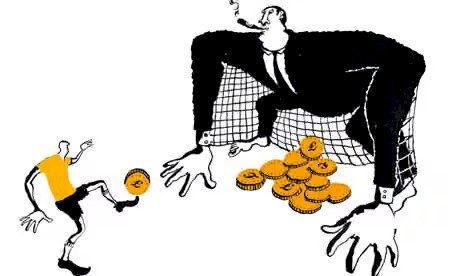
At first glance, approaching football through the lens of social philosophy and economic critique might seem trivial as though a serious thinker were wasting time analyzing what is "just a game." But this is precisely the illusion we must resist. Football today is no longer "just a game." With an annual turnover exceeding six hundred billion dollars, billions of spectators worldwide, and cycles of media, politics, finance, and culture interwoven into its fabric, football has become one of the most significant institutions for the ideological reproduction of contemporary capitalism.
In his early works, Marx spoke of alienation the condition in which the human being becomes estranged from the product of their labor, from the labor process itself, from other human beings, and from their own species-being. This concept, elaborated in the Economic and Philosophic Manuscripts of 1844, is the single most useful key for understanding football's role in the modern world. The person alienated from their labor is compelled to seek identity, belonging, and meaning elsewhere, and late capitalism, with remarkable cunning, has made football one of the primary arenas for meeting that need.
Yet a rigorous Marxist critique never falls into abstract moralism. One cannot say "football is bad" any more than one can say "religion is bad." Marx understood religion not as a conspiracy but as a response, an ideologically incomplete response to genuine suffering. Football is the same. The question is not why people love football. The question is: what structure produces, organizes, channels, and commodifies that love?
Football as the Opium of the People
In his introduction to the Critique of Hegel's Philosophy of Right, Marx wrote that religion is "the sigh of the oppressed creature, the heart of a heartless world, and the soul of soulless conditions. It is the opium of the people." This sentence is routinely torn from its context and misread as contempt. Marx did not despise religion; he understood it as a reflection of real pain, the pain of alienation in a world where human beings deserve far better.
The same logic can be extended carefully to football. A worker crushed six days a week under managerial pressure, precarious contracts, inadequate wages, and job insecurity finds, in the ninety minutes their team plays, something capitalism ordinarily withholds: a sense of belonging, the thrill of participation, collective passion, and the illusion of agency the feeling that I am part of something that matters. This need is real. But the form capitalism provides for satisfying it neither challenges the relations of production nor transforms them; it reproduces them.
One dangerous simplification must be avoided: the idea that "people are deceived" and would abandon football if they only thought more clearly. This view a form of intellectual positivism treats people as passive objects. Football fans are often fully aware of the industry's commercial nature. But awareness alone is insufficient, because the problem does not reside at the level of individual consciousness; it resides in the social, economic, and cultural structures within which that consciousness is formed.
This is where Antonio Gramsci becomes indispensable. Gramsci developed the concept of hegemony to explain precisely this phenomenon: domination exercised not through direct coercion but through consent and the internalization of values. Football is one of the most effective arenas of cultural hegemony. People embrace it not under compulsion but with genuine enthusiasm and it is this voluntariness that makes it a form of domination far more difficult to critique from the outside than any overt coercion.
The Political Economy of Football
In Capital, Marx demonstrated that value is created in the process of production but appropriated in varied forms through distribution and exchange. How does this framework apply to the economy of football?
The producers of value in football are primarily the players but not only them. Workers who labor in stadiums, those who sew sports kits in factories across Asia and Latin America, media network employees, producers, technicians all these people produce value. Players like Ronaldo or Messi, despite their astronomical wages, are ultimately selling labor-power in the Marxist sense; the difference is that their market position owing to rare skill and a quasi-monopolistic position in a structurally oligopolistic industry allows them to capture a far larger share of the value produced. Yet even these superstars remain dependent on clubs, sponsors, and the marketing machinery that constructs the value of their brand.
Where is value appropriated? Here enter the club owners, media conglomerates, multinational sportswear corporations, and financial capitalists. Manchester City belongs to Abu Dhabi's sovereign wealth fund. Paris Saint-Germain is Qatari state property. Chelsea was once owned by a Russian oligarch. These are not accidents. Capital whether in the form of petrodollars or financial speculation seeks fields of valorization, and football, with its unique combination of global attention and human emotion, has become one of the most attractive fields available.
In this framework, the fan occupies a double role. On one hand, they are a direct consumer: buying tickets, replica shirts, media subscriptions. On the other hand, their attention has itself become a commodity what the contemporary media economy calls the "attention economy." Every time a fan watches a goal clip, algorithms harvest data, advertisers pay premiums, and platforms extract profit. The fan is not merely a consumer but an active participant in the circuit of value production receiving no wage for doing so.
The commodification of the body is one of the most striking aspects of Marxist critique in this domain. In classical capitalism, the worker sells labor-power. In football, the player sells their body in a far more comprehensive sense: not only skill, but image, personality, private life, and even emotion. "Image rights" contracts make this explicit. The player is no longer merely an athlete; they are a brand, a financial asset, and their "real person" and their "media persona" have become so entangled that separating the two is nearly impossible.
The Ideological State Apparatus
Louis Althusser, the French Marxist philosopher, drew a crucial distinction in his celebrated essay "Ideology and Ideological State Apparatuses" between *Repressive State Apparatuses* (police, army, prisons) and “Ideological State Apparatuses” (school, family, media, church). The ideological apparatuses function not through force but through ideology shaping what people regard as "natural" and "self-evident."
Football and spectator sport more broadly can be analyzed as one such ideological apparatus, though its relationship to "the state" in the strict sense is not always direct. What football reproduces includes several key ideologies:
- Nationalism and false collective identity: The FIFA World Cup is one of the most powerful instruments for reproducing nationalist sentiment. During this event, class contradictions within a society are temporarily suppressed and "the nation" is represented as a unified whole. The worker in Iran, Brazil, or England who must negotiate with their employer over wages tomorrow is, tonight, excited on behalf of the same "country." This collective identity is not false in the sense of being a lie but false in the sense of being incomplete: it covers the class dimension of identity and foregrounds the national dimension.
- Meritocracy and the myth of individual success: The ragsto-riches narratives of players who rose from poverty to stardom Pelé from Brazil, Messi from Rosario, Ronaldo from Madeira are inseparable from football's ideology. These stories carry a message: "talent and hard work lead to success." This message is ideological not because it is entirely false but because it converts an exception into a rule. For every Messi who rises from poverty, hundreds of thousands of talented children are never given the opportunity — because of poverty, unequal access, discrimination, or simple bad luck. Those stories are not told.
- Competition as natural value: Football represents competition as the most fundamental of human values. "Winning" becomes not one value among others but the supreme criterion of worth. This is the logic of the capitalist market: competition is natural, hierarchy is inevitable, the winners "deserve" victory. Football internalizes this logic in billions of minds from childhood onward.
The Society of the Spectacle
Guy Debord, the radical French theorist and co-founder of the Situationist International, proposed in The Society of the Spectacle (1967) a theory that applies to football with startling precision fifty years after it was written.
Debord argued that in advanced capitalism, "life" has been replaced by "spectacle." What was once lived directly is now experienced through representation. Real social relations are replaced by relations mediated through images and commodities. The spectacle, in Debord's sense, means: human beings become spectators of life rather than its actors.
Modern football has achieved its most spectacular form. The match on the pitch originally a bodily, collective experience is today consumed primarily through television screens, online streams, and social media highlights. Even physical presence in the stadium is no longer "immediate": giant screens, instant replays, and live media coverage all mediate the experience of those who are actually there.
Debord insisted that the spectacle is not merely a collection of images but "a social relation between people that is mediated by images." In football, fans relate to one another through their team; their social identity, their friendship networks, even their weekly rhythm are constructed and organized by this spectacle.
In this framework, the fan's "lived experience" often invoked in its defense is itself an industrial product. The emotion they genuinely feel is real; but the conditions that produce and channel that emotion have been engineered by the apparatus of capital. Stadiums are architecturally designed to maximize "collective vibration." The match calendar is constructed to generate a continuous rhythm in fans' lives. Media build pre-match tension across entire weeks. This is the engineering of affect.
Media, the Attention Economy, and Football in the Platform Age
In the digital economy, "attention" has become the scarcest resource. Herbert Simon, the Nobel Prize-winning economist, theorized the "attention economy": in a world of abundant information, human attention becomes scarce and therefore valuable. Capitalist media originally established merely for the transmission of news have gradually transformed into machines for the capture of attention.
Football occupies an unparalleled position in this economy. No content can capture attention with the intensity and concentration of live sport. Unlike television series, which can be recorded and watched later, a football match "must" be watched live. This feature has made broadcast rights one of the most expensive commodities in media.
Broadcasting rights deals in football reach astronomical figures: the English Premier League's contracts for the 2022–2025 cycle totaled over ten billion pounds across various networks. Where does this money come from? From large corporations paying to display their advertisements before tens of millions of fully concentrated viewers. The circuit is complete: fan attention → advertising revenue → broadcast rights fees → return on capital.
In the platform age, however, this logic has entered a new phase. Social media platforms (Instagram, YouTube, TikTok) have radically transformed the distribution channels of football content. Players themselves have become media channels. Cristiano Ronaldo, with over 600 million Instagram followers, is not merely an athlete but a self-sufficient media outlet. Each post carries millions of dollars in advertising value. His personality, private life, lifestyle, and even his emotions have been commodified in the most direct possible sense.
This represents a new stage in the commodification of everyday life. No longer is only the player's physical labor on the pitch a commodity; their entire social and cultural existence, what they eat, where they travel, who they befriend, has become a stream of economic value.
The Political Geography of Football — Sporting Imperialism
Lenin, in Imperialism, the Highest Stage of Capitalism, showed that advanced capitalism inevitably tends toward the export of capital, toward monopoly, and toward the division of the world among great powers. This framework can be extended to the geography of global football.
The player transfer market is one of the clearest manifestations of the global labor market. Young players from Ghana, Senegal, Brazil, Argentina, and other semi-peripheral countries are identified by talent-scouting agencies (often owned by European capital) and signed under contracts that young players or their impoverished families cannot properly evaluate. The value they carry to wealthy European leagues in their bodies and talents remains primarily in those leagues. The countries of origin "export" their human resources and receive in return a modest flow of remittances.
The entry of Gulf state capital, Qatar, Saudi Arabia, the UAE, into football must be understood within a geopolitical framework. These investments are not purely profit-seeking; they are instruments of "soft power," international legitimation, and what critics have rightly called sportswashing. Regimes that repress at home construct a positive global identity through sport. The 2022 Qatar World Cup was the paradigmatic case: criticisms of the conditions of migrant workers who built the stadiums, the criminalization of same-sex relations, and restrictions on freedom of expression were pushed to the margins by the media spectacle of the tournament.
Structural inequality in football's geography: European leagues (the Premier League, La Liga, Serie A, the Bundesliga) with their multi-billion-dollar broadcast deals, have created a financial gap with Asian, African, and even Latin American leagues that is structurally irreducible. This inequality reproduces the core-periphery system within football: talent flows from the periphery to the core, value accumulates at the core, and the periphery remains a reservoir of cheap labor.
Resistance, Solidarity, and Football's Emancipatory Potential
A Marxist analysis that sees only domination and exploitation is not dialectical. Marx himself insisted that history is simultaneously a site of domination and a site of resistance and these two are never fully separable.
Football in nineteenth-century England grew from within the working class. Many of England's great clubs were founded by factory workers, trade unions, or parish churches serving working-class communities. Manchester City emerged from a church in the impoverished neighborhood of Ancoats; West Ham was born as Thames Ironworks FC from within a factory. These roots are real and demonstrate that football was not inherently an instrument of domination. It is the capitalist form of its organization that has made it one.
Within sporting capitalism, examples of resistance persist. FC Sankt Pauli in Hamburg has been known since the 1980s as a club with an explicitly anti-fascist, feminist, and anti-racist identity, whose supporters actively resist the encroachment of large capital and the commodification of the club. Athletic Bilbao has maintained its policy of fielding only Basque players as a form of popular-national identity against global homogenization. AFC Wimbledon was founded from scratch by supporters after capitalists relocated the original club to Milton Keynes.
Stadiums and supporter culture sometimes become genuinely social spaces in which despite the logic of commodification real solidarity, lasting friendships, and even political consciousness take shape. Ultras supporters in Italy, Turkey, and Arab countries have at times become genuine political actors. In Egypt's 2011 revolution, ultras groups were among the most organized sections of the protesters in Tahrir Square people who had accumulated years of experience confronting police outside stadiums.
All of this demonstrates that football is neither a single thing nor permanently situated on the side of domination or resistance. It is a terrain in the Gramscian sense on which different social forces contend with one another. Capital strives to fully commodify football; people strive to make of it a space for belonging, meaning, and even resistance. The outcome of this struggle is never predetermined.
The Athlete as Human Capital
In the 1844 Manuscripts, Marx described alienation as estrangement from labor, from the product of labor, from other human beings, and from the human "species-being." In professional football, the young player who enters a club academy at the age of ten or twelve is from the very beginning inserted into a process that converts their body, their talent, and their identity into an asset.
Football academies are machines that produce not only skill but mentality. The player formed within this system learns to regard themselves as a "commodity," to "sell" themselves to the market, to measure their own worth through contracts and statistics. This is a profound alienation: a human being who understands their physical existence not as lived experience but as human capital.
Injury within this framework acquires a double meaning. On one hand, injury is a human and painful experience. On the other, in the language of football economics, injury is "depreciation of an asset." Clubs insure their players against injury and thereby explicitly acknowledge this duality: the player's body is property, and it must be insured against "damage."
Compulsory retirement at thirty-five or forty is another clear manifestation of the logic of "useful life" a concept ordinarily applied in economics to machinery. A player who "is no longer productive" is discarded, precisely like a machine that has become obsolete. Many former players, confronting this reality, experience profound identity crises because the thing that had been understood as "I," namely the footballer, no longer exists.
Women's Football
Any Marxist analysis of football is incomplete without attention to gender. Women's football illuminates with clarity the contradictions between the logic of capital and the structures of patriarchy.
On one hand, capitalist logic has in recent decades operated in favor of the expansion of women's football. New markets, new audiences, new advertising opportunities have been real economic incentives for investment in the women's game. The 2023 Women's World Cup in Australia and New Zealand broke viewership records, demonstrating that capital can exploit gender equality as a market.
On the other hand, this same capitalist logic maintains women's football in a subordinate position. The wage gap between male and female players remains enormous. Media investment in the women's game remains a fraction of that in men’s not because of any lack of talent or appeal, but because of decisions that flow from profit logic operating in markets shaped over decades by patriarchal ideology.
This contradiction reveals that capitalism and patriarchy have a complex relationship: sometimes reinforcing each other, sometimes in tension. Marxist feminist analysis — associated with what is sometimes called "socialist feminism" — holds that emancipation comes not from one struggle alone but from the intersection of class and gender struggles.
Questions of Emancipation
A Marxist analysis is not merely diagnosis; it must also point toward directions of change. But here too simplification must be resisted. Different Marxist traditions have reached different conclusions.
Should we demand "workers' football" or "people's clubs"? This approach realized in examples like FC United of Manchester or AFC Wimbledon is appealing, but within the framework of global capitalism, such clubs remain marginal.
Should we demand state regulation of the football market? Restricting monopoly broadcast rights, introducing wage caps, imposing taxes on player transfers to redistribute resources to grassroots sport? These are reformist proposals viable within capitalism but incapable of transforming its fundamental structure.
Should we transform our understanding of football itself? This approach sometimes called "critical spectatorship" involves engaging with the phenomenon from a conscious and critical position: enjoying its beauty while remaining aware of the exploitative structures within it; taking pleasure in the spectacle while refusing identification with brands and capitalists.
But perhaps the most important question is this: what if the social energy mobilized in football this collective passion, this solidarity, this capacity for organization were redirected toward genuine social movements? History has shown this to be possible: as the Egyptian ultras demonstrated in 2011, as nineteenth-century labor movements-built football clubs, as women's football clubs in Iran have become spaces for articulating social demands.
Conclusion: Beyond the Game
Football in contemporary capitalism is a living contradiction: between pleasure and exploitation, between solidarity and commodification, between identity and alienation, between spectacle and real life. These contradictions cannot be resolved by "ignoring" football just as Marx proposed not the denial of religion but the transformation of the real conditions that made it necessary.
The essential questions must remain: Who produces value? Who appropriates it? What relations make this distribution possible and "natural"? And what forces can change it?
Football can serve as a complete mirror of contemporary capitalism if we know how to look into it. And this critical seeing is itself the first step on the path of transformation. For no system can unsee what has already been seen.